Using LLMs to communicate at work is rude
I recently left my job, and there were many many reasons why, but some of the reasons I wanted to leave have less to do with that job in particular, and more to do with the current state of work in general, what it might feel like working at any job these days. It's something that started happening around December 2025. One of the Opus models came out, agentic ways of working became a new norm, and everyone felt that material shift in the quality of the output, like it might actually be worth the trouble. Many people suddenly started using LLMs to not just write code, but communicate with each other as well, and this weird anti-social behavior started happening every single day at work. I'm not sure I'll be able to escape this new thing I hate, so if I can't escape it, I figured maybe I should try to understand it better. Figure out how I can work around it, or convince some people to stop doing it?
I'll give you some examples:
An executive and I were discussing what to do about the state of our design system. I sent them some open questions I thought were important, and some directions we could explore for each. They pasted my message into Claude and then sent me the output verbatim, without editing or adding anything to it. When I began picking apart some of the recommendations that Claude had provided in their copy-pasted message, the executive took it personally and got defensive. When I asked them why they pasted and sent the message – what response were they looking for? – they said they were just sharing what Claude thought about what I had said.
I followed up with a fellow manager about their negative interactions with one of my reports, wondering if they'd seen improvements after I'd begun coaching them. The situation was sensitive and nuanced, as most performance issues are. The manager replied with an AI-generated summary of incomplete observations and assumptions about how the employee was doing, pulled together from what the AI agent could find in Slack conversations and Google Calendar meetings. I turned to other colleagues for human feedback that I could actually use to determine whether the issue was resolved.
Senior leadership regularly used Claude to compose messages and developed a track record of telling us something would happen, or we'd do something a specific way, then never referring back to it or bringing it up again. One time, they sent an AI-assisted message describing how they would share performance feedback coming out of a calibration meeting. They would meet with each of us individually, review our personal goals, and share how the executive team thinks we're doing. I gathered my goals and self-reflections in preparation for that meeting, which never came. We never did my performance review, and they never mentioned it again.
For a lot of people in tech, this has quickly become the new "business as usual": people at work reaching for generative AI to answer questions, communicate, provide feedback.
But like, why are they doing this??? In each situation, it felt rude. Like I was expecting them to respond in a certain way, and what I got was... well, kinda felt like it was more important to simply react, rather than react meaningfully. It’s easy to guess at what may be rewarding this behavior at work, but what are the consequences of this new normal?
In each case, on the receiving end, it was clear to me that what they were doing was rude. The executive was withholding their own opinions and feelings on the subject and acting naive about what I was attempting to do (engage in a discussion with them). My peer was ignoring my bid for thoughtful observations and instead phoned it in, so poorly and inaccurately that I had to get what I needed from others. The executive team was setting false expectations, maybe without realizing it (they probably didn't read the message they themselves sent). Did any of them know what they were doing was rude? And why is it rude in the first place?
In the first and second examples, I'm asking my colleagues for their thoughts and opinions on the topic, and I get back something else, either a pure outsourced answer from an LLM, or an inscrutable amalgamation of both the person and the LLM, obscuring their actual thoughts and opinions. It's rude because it's not meeting my expectations, it's just not how that social interaction is supposed to work. More specifically, it's actually kinda hindering our ability to do our jobs, in a way. It feels like outsourcing discussion and analysis to LLMs. I'm trying to have a conversation with a person, and this agentic LLM gets inserted into the mix, and then it's hard to tell what's them and what's the agent, hard to predict where the discussion is headed, robbing me of learning more about how this person ticks and how best to collaborate with them... Rude!
The way that both the executive and my peer manager acted violates a kind of unspoken social rule. You want to know what I really think, that's the valuable information for you in this exchange. And when that expectation isn't met, it develops a new set of expectations: if you ask me for what I really think, you might not get it. And if I'm unreliable, if you can't get what you need from me consistently then why would you ask in the first place? There you go, just stop interacting with me and you don't have to deal with this rude behavior ever again!
I wish it were that simple. In a work environment, oftentimes we don't have a choice about who we interact with and when. In some cases, I really need to ask this one person specifically because it's actually blocking me from making progress on a task. In the case of the executive, I wanted to develop a strategy for design system governance and roadmapping, something I absolutely can't do on my own. It requires partnership across departments and teams, and the two of us were the respective leaders, so it seems important to have both leaders hash out the scope of work and what resources or team members are needed. Is Claude's perspective on these things going to help with that? I'm open, but like, shouldn't the human leaders be steering the conversation? Outsourcing responses to Claude is almost like saying, "I'm not interested in participating in this decision-making process. Here's a bunch of random things Claude has to say about a smattering of the decisions we will need to make, in no particular order." It's as if they're eschewing their responsibility at work.
This is the crux: perhaps the person using Claude to communicate with others thinks they're being clever and efficient. I think they're being lazy, rude, choosing not to serve their role or fulfill their responsibilities given the situation. Or worse, revealing they don’t know what their job is, or how to do it, because of how much they’re suddenly leaning on LLMs.
In the case of the peer manager, that's quite literally what was happening, in a more overt way. Maybe they were strapped for time, or they didn't feel like going to the trouble of helping gather observations about my report in order to help me determine if their performance had improved? Either way, they phoned it in: they asked Claude to use Slack messages in public channels and meeting notes to determine if my report had been setting and meeting deadlines consistently. There wasn't enough data available to make that determination, but Claude cheerfully concluded that they hadn't. If you asked any team member who worked with them, you would have received a clear "yes, they're meeting deadlines" like I did, because I bothered asking. This was going to determine whether a performance issue still existed, or needed to be escalated. Pretty fucking important time to be sharing real observations and helping assess the situation!
The third example is the murkiest one, but I think it really makes a point for me. The executive team set an expectation that we'd proceed with performance reviews a specific way, but without really knowing that they were committing to doing it. Claude decided, and they simply passed the decision along. On the receiving end, their reports prepared for a conversation that never happened (like in mine), or focused entirely on the feedback and had nothing to do with personal goals (some of my peers). There was a decision made, baked into the LLM output, with no person critically considering whether that was the right choice. It led to people working under them having to consider that they hadn't read every message carefully, so then it became normal if some commitments were never followed through on, but you could never know for sure which ones. Rude at the very least, but crucially they’ve now become inconsistent, which means unpredictable, and unpredictable means everyone moving slower around them and acting more conservatively so they can pivot if new information comes.
Being surrounded by people using LLMs to communicate at work feels like death of 1000 moral papercuts. We expect people to do their jobs, share their thinking, help me with the analysis, engage with me on this problem – and when we experience them not doing that job, it's rude to everyone around them who has to then pick up the slack. I can copy and paste my own thoughts on design system frameworks into Claude just fine, if I ever want to know what it thinks, thank you. But I can't make decisions about governance, roles and responsibilities. I can't easily gather feedback about my team. I certainly can't share performance feedback with myself and align my goals with what the business needs me to get better at. If I can't rely on you, it makes more work for me. I mean really, if you're not consistently helping me out, why should I depend on you? Why should I do anything for you in return?
Something valuable is really being harmed: our ability to trust each other. Obviously LLMs weren't the first thing, or the only thing, to cause people at work to be lazy, skip parts of their job, half-ass things, set expectations with no follow-through. But any team who is halfway functional or remotely productive has a degree of interdependence built on showing up consistently over the time that we work together.
The true potential of a team working together really emerges when we actually engage with each other regularly and create that healthy interdependence. Diverse teams achieve greater outcomes because of the people involved, not because that team outsourced their thinking and decision making to LLMs. A great deal of my work in the last several years has been leading teams who have high standards, drive the right outcomes, and they're capable of that because they're interdependent. Growing a team that operates this way is virtually impossible if everyone's using Claude to communicate with one another, for all the reasons I outlined above. If you want to build a team that achieves big things, inviting LLMs into conversations as if it's a colleague, or using it to speak for you, is a surefire way of preventing that from happening.
To really drive this home, we can look at the work of Westrum and his typology of organizational cultures. His work explored how culture influences the way information flows within an organization, and identified three characteristics of good information:
- Provides answers to the questions that the receiver needs answered
- Timely
- Presented in such a way that the receiver can use it effectively
In each example, using LLMs to help communicate skipped at least one of the three. So you can pretty well say the quality of information was meh at best. But how does culture influence this? These might look familiar:
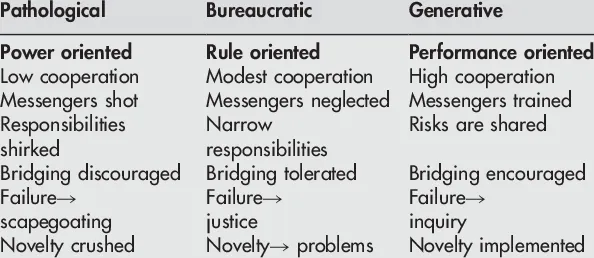
Note "responsibilities shirked" and "low cooperation" under Pathological. When we don't share risks and we don't cooperate, when we let Claude communicate and make decisions for us, we're nurturing a worse culture with lower psychological safety that stunts our ability to achieve goals and really do something meaningful in the world.
Ultimately, I don't have control over much. I can guide my team in how to use LLMs at work, I can build kick-ass teams consistently because of how I lead them on technology, but I can't make that decision for other teams and other companies. So if it's not going to stop anytime soon, and I can't avoid it... Can someone share a polite way of saying, "asking you, not Claude"?